 O Street International
Wishing You a Happy New Year
O Street International wishes you a Happy and Prosperous New Year and would like to thank everyone for their support in 2015. We have been busy this year, and are looking forward to a successful 2016. Since our founding, we hit the ground running, with a Sports and Wellness Diplomacy program in the UAE. Our initial program was a success and reached over 150 students during our weeklong visit. In 2016, we will be continuing our programming in UAE, as well as expanding our wellness and sports related exchange programs.
We have had a number of articles written, which you can find on our website. In 2016, look for more research articles related to diplomacy and the benefits of cultural exchanges. We will also be developing our programming areas in 2016 to include increased outreach on women and youth, wellness and health, reconciliation, and rule of law. We are working on expanding into Africa, Asia, and Latin America. Stay tuned for more programming, more articles, and a new website to display it all in the coming months.
We want to thank you for your continued support and wish you a prosperous 2016.
Supporting Exchanges on Giving Tuesday
At O Street International, we understand that a little goes a long way. That is why we focus on creating relationships through exchanges, one person at a time. Our mission to use Outreach and Opportunities to Overcome Boundaries relies on the support of those that like us, believe it is a successful tool. We are continuously looking at how we can engage a wider audience and are developing a variety of exchange programs, including health and wellness, sports, sustainability, education, and community development and outreach programs. Our programs need your support to continue successfully reaching people internationally and domestically. You are all part of O Street International’s success, and we are thankful to our supporters. On Giving Tuesday, please support O Street International’s work and program development by making a financial contribution. You can make your contribution at http://ostreetinternational.org/contribute/.
Thank You!
Supporting Cast
Supporting Cast
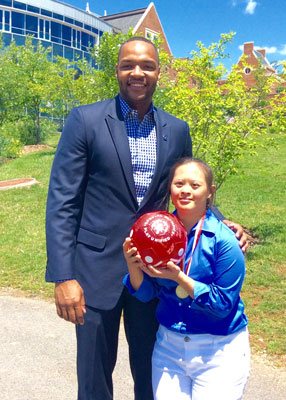
O Street International is proud to present this article, written by board president, Omari Faulkner, which appeared October 23, 2015, at Special Olympics USA
Once an athlete, you’re always an athlete. You never lose the drive and determination it takes to compete, or the fortitude to lose and show up the next day to try again, and you recognize these traits when you see them in other people.
You can see it in Alicia Gogue. She’s been competing in Special Olympics and expanding her sports acumen, mostly as a cyclist but also in golf, swimming, skiing, rollerblading, karate and horseback riding.
I met Alicia and her father, Alex Gogue, when they came to Georgetown University in June (2015). She was the guest speaker at a Sports Industry Management Institute meeting of 148 students. I am much removed from my glory days, when time never stood still and burning thousands of calories during hours of intense basketball practice was just another day at the office. But I saw in Alicia the attitude it takes to be a winner: In her words, “No matter what it takes and how long it takes.”
Alicia, 31, spoke before heading to the 2015 Special Olympics World Games in Los Angeles. She first got involved with sports at age 12, and recalled that “I was very proud of myself” after winning her first medals. She continued to compete, adding events and specialties along the way, and says now that “participating in all different sports made me strong, confident, disciplined and developed physically.” When I asked how she could fit in so many different sports, as well as working in child care development, she simply replied, “I tell myself if one can do it, so can I. … I believe that I am capable of reaching countless and limitless opportunities.” Alicia’s most proud when she has the opportunity to demonstrate that she can achieve various sporting milestones. Her technique is simple: “I start off slowly and gradually build up to the level required by the sports event which I compete in.”
Another thing every athlete knows is that you can’t do it alone. Although we are determined and at times relentless, frequently it’s those who push us to greatness, who see our potential and shape it, who are the real heroes. They endure the pain and the struggles just as we do; they face down the outsiders who put limits on our physical and mental abilities; they are responsible for so much of the end product. Our coaches, supporters, parents — those who inspire us to feel unstoppable — are the root of greatness.
Alicia knows this too. Her family, she says, “promote morale and self-esteem. My parents constantly remind me that I can do it! Like my grandmother told me: ‘nothing easy, nothing hard; just do it.’”
Alex Gogue shines as he recounts bringing up his daughter. Asked whether being father to an athlete with Down Syndrome brought any special fears, he said, “I never feared anything with Alicia. … We accentuate or instill the positive and distill or dispel the negativity.” He added, “Everyone, believe it or not, has some sort of disability. Some people are good at playing a sport, and some may have difficulties.”
Every athlete has people in their own corner, but every Special Olympics competitor owes a debt to Eunice Kennedy Shriver, the younger sister of President John F. Kennedy. Shriver saw in the early 1960s the need for summer camp offerings for children with intellectual disabilities. There was no foundation in place to offer such a sporting experience, but with the same kind of determination and support that great athletes need, she started the process to create what is now known across the globe as Special Olympics.
Alicia Gogue’s testimony that morning inspired us all. I will never forget her words, or the feeling of appreciation her father exuded in knowing that she had an outlet to express herself and change lives. What I took from Alicia’s story more than anything is that as athletes we often strive for greatness due to those who believe in our abilities, yet their rewards come only through our successes.
There’s another, less pleasant part of being an athlete that we have to get used to: falling short. Alicia won silver medals in the 1,000- and 2,000-meter cycling races at the Los Angeles Special Olympics, but as her father points out, it could have been more: She was disqualified from the 500-meter race, along with several other riders, in the wake of a technical problem and confusion over the location of the finish line.
But the important thing is to remember what you can and can’t control. And in a situation like that, the only thing you can control is your will to get back out there and keep working. Alicia knows this too: “It isn’t all about winning the gold,” she told me; “the ultimate prize is trying, preparation and giving it your best – giving it your all.”
Happy Labor Day
At O Street International we believe in celebrating culture, the qualities in a person, a community and or nation that shape values, rituals, art, and more- from one generation to the next. Labor Day is an opportunity to recognize a culture of hard work that defines our country. We pay tribute to the American labor movement for which we owe so much, whose dedication contribute significantly to our great Nation’s Freedom and Prosperity.
As you enjoy this wonderful day with family and friends, never forget that workers are the backbone of nations. We will continue to spread our mission for transforming international and domestic engagement ideas into high-impact solutions that energize cultural exchange while connecting people around the world. We are excited to continue providing Americans the opportunity to share their talents and hard work with the world.
I wish you, and workers everywhere, a blessed and memorable 2015 Labor Day.
Best Wishes,
Omari Faulkner- Founder & Board President, O Street International
Sports Diplomacy for Balkan Region Youth Continues in Montenegro
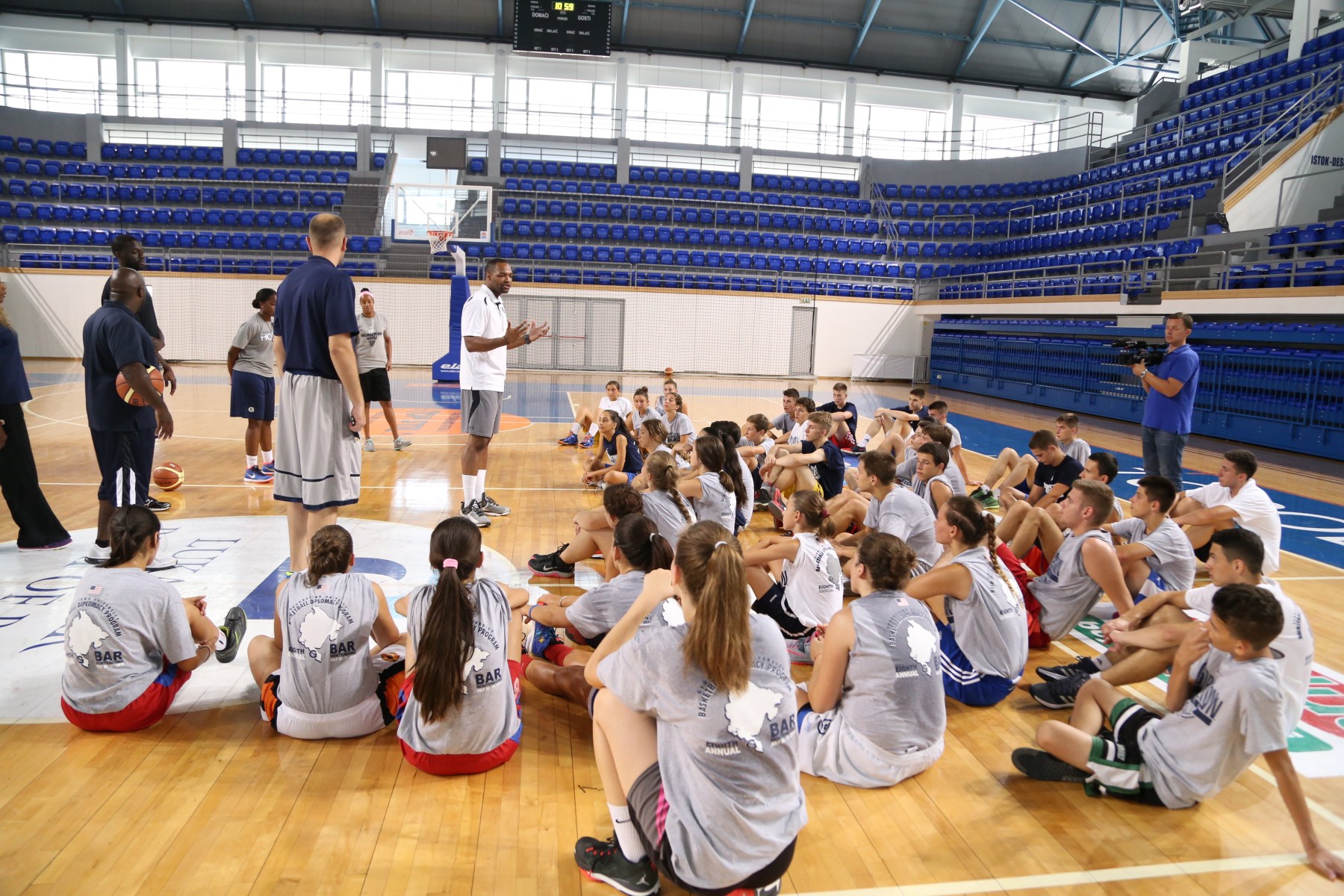
O Street International would like to congratulate Georgetown University’s Center for Intercultural Education and Development (CIED) program on the successful completion of another Sports Diplomacy program hosted in Bar, Montenegro. The partnership between Georgetown University and the U.S. Embassy in Podgorica, Montenegro has continued to flourish. United States Ambassador to Montenegro, Margaret Uyehara, still in her first year in Podgorica, attended the opening ceremony affirming the importance of leadership and volunteerism through sport. The Mayor of Bar, Zoran Srzentic also attended the opening ceremony.
We congratulate Omari Faulkner, O Street International’s Board President, for his fourth year participating in the program, which uses sports to develop leadership skills and build community among its participants, all members of various Balkan region nations. “Now in its seventh year of operation, this program is very dear to me; the opportunity to support my teammate Sead Dizdarevic and his home country has been a phenomenal cultural exchange,” says Faulkner.
 From July 26 through July 31, students from Croatia, Montenegro, Albania and Kosovo gathered in Bar, Montenegro to learn about Sports as a tool for volunteerism, leadership, and community building. The program highlighted skills such as leadership, volunteerism, and women’s empowerment, for the participants. Participants also had an opportunity to share their culture with both participants, country coaches, and U.S. Team leaders.
O Street International always supports the use of engagement as a means of creating awareness and promoting understanding. Sports diplomacy programs such as this one highlight the power of common themes, such as sports, to bring people together while promoting outreach and opportunities to overcome boundaries.
Congratulations to Tamika Catchings, Recipient of the Sports Humanitarian of the Year Award
O Street International would like to congratulate Tamika Catchings on winning the first-ever Sports Humanitarian of the Year Award, presented by ESPN and Playstation. Catchings and her foundation,Catch the Stars Foundation, teaches young girls and boys about embracing their differences, building their self-esteem and overcoming obstacles. The Foundation also promotes fitness, literacy and mentoring to youth in Indianapolis. O Street International’s co-founder, Omari Faulkner, had the pleasure of working with Catchings in the U.A.E, where both were supporting the promotion of Sports and Wellness at the NYU Abu Dhabi Conference on Embracing Sports in the UAE.
O Street International believes in promoting opportunities and outreach to overcome boundaries. We are happy when other nonprofits that are doing great work to improve the lives of others are recognized. With this, we congratulate Tamika Catchings and the Catch the Stars Foundation.

Transcending Boundaries: The Power of Sport
O Street International is pleased to recently have our article published on Sports and Development, a platform for promoting sports and development and providing resources on the subject. The article, Transcending Boundaries Through Sports, written by O Street International’s Leah Kartun, takes a look at the work O Street International is doing to use sport diplomacy to empower youth and bridge cultural divides. O Street International’s 2014 & 2015 UAE Sports Diplomacy and Wellness program is highlighted in the article, as well as the importance O Street International places on using cultural exchanges, in this case, sports, to connect people, build bridges, and increase awareness. O Street International would like to thank Sports and Development for publishing the article, as well as the U.S. Embassy Abu Dhabi and our other partners for supporting our work.

Celebrating International Day of Sport for Development and Peace
2015 International Day of Sport for Development and Peace
The United Nations General Assembly proclaimed April 6 as the International Day of Sport for Development and Peace back in 2013. Today, we celebrate sports and its contribution to educational advancement, human development, healthy lifestyles, and as a global language shared by many cultures.
“Through sports I have developed a network of tens of thousands of global citizens which comprise of government leaders, youth, community developers, and sports aficionados. I consider each and every one of these individuals as my family because they have impacted my life in so many ways,” said O Street International founder and former U.S. Department of State Cultural Envoy, Omari Faulkner. “On this International Day of Sport for Development and Peace, let us all strive to do more and truly develop the meaning of social responsibility as it relates to sports.”
Since O Street International’s inception in 2014, our board of directors and executive committee are committed to utilizing sports as a cultural tool for engagement, both domestically and internationally.
“Sport has the power to help develop the potential of individuals, communities, and nations,” said UN Secretary-General Ban Ki-moon. Mr. Ban is also a major champion for the role sports can play in eliminating gender barriers and focusing on the fundamental values such as equality and respect for all people.
O Street International would like to give thanks to the United Nations for its recognition of the positive attributes that sports provide globally. Our entire organization pledges to continue to promote and actively develop programs and partnerships that will deliver sports as a means to educational, social and economic development.
O Street International
Recognizing the Hurdles
The Hurdles: Female Sport Participation Within the Islamic Community
By Leah Kartun
 When asked about her participation in the 2012 London Olympic Games and the public reception from her home country of Afghanistan, Tahmina Kohistani responded, “They are not ready to accept me. They are thinking that I am wrong and I cannot do that because I am a Muslim and I am from Afghanistan and it’s not good for being a female athlete in my country” (Wise, 2012). The topic of gender continues to be one of the more discriminatory and polarizing issues in our world today, especially when it comes to the stereotypes and obstacles which surround physical activity, sport, and the expectations of women’s bodies and their physical appearances. Girls and women alike in the Islamic world continue to fight for the opportunity to play sport. Professional Muslim female athletes like Tahmina Kohistani continue to play in opposition to oppressive voices in the Islamic community. But aside from those discriminatory messages that individuals like Kohistani might receive, what other obstacles stand in the way of Muslim females that don’t stand in the public eye, yet still have a desire to play? As I will outline below, recent studies have shown that the lack of female sport participation within the Islamic community often occurs due to apprehension over appearance and dress, lack of approval or involvement of others, and technical/logistical issues within the framework of sport/physical activity programs.
Before I discuss some of the common barriers that exist for Muslim females who wish to participate in sport activities, it is important to take note of the Islamic feminist perspective towards gender equity. Early Islam acknowledged and encouraged the equal contributions of both men and women in the private and public sector, but centuries of globalization, migration, and conflict have caused the level of gender equity to vary throughout different Islamic communities (Jawad, 2011). Fortunately, the movement of Islamic feminism has opened the door for issues like gender equality and social justice to be discussed within the framework of the Islamic religion and interpretation of text. Dr. Haifaa Jawad (2009), a proponent of the Islamic feminist ideology, observes that while the Quran and the practice of Muhammad do not condone the disempowerment of Muslim women, this has unfortunately been a common social reality within the Islamic community. For Jawad and other supporters of Islamic female equality, the basic tenants and texts of the faith call “for the holistic development of human beings with attention to spirituality, as well as intellectual and physical well-being… both men and women are strongly encouraged to live healthily in body, mind and spirit” (2009, p. 32).
In her study of the British Muslim Women’s Football Team, Aisha Ahmad (2011) explored how members of the team had to constantly negotiate multiple aspects of their identities (e.g. gender, ethnicity, religion) as they attempted to find their voice and their place in society as Muslim female footballers. Ultimately, the BMWFT wrestled with common identity issues that female athletes in the Islamic community struggle with today, such as adhering to religious beliefs through dress like the hijab, as well as challenging traditional gender roles by participating in an often male-dominated sport. In order to encourage and empower Muslim girls and women to participate in sport, we must recognize that their identity is complex and may require simple compromise in terms of areas like dress codes. For example, only recently did FIFA finally lift their ban on turbans and hijabs for its players. While this ban may have initially been decided with safety in mind, it was a significant cause of tension for players who did not wish to choose between their love for their religion and their passion for the sport.
Not unlike other females around the world and outside of the Islamic community, Muslim women and girls have voiced their concerns about their appearance (aside from the hijab) during physical activity. Berger and Peerson (2009) investigated the relationship between physical activity and the social surroundings of young Muslim women in the United Arab Emirates. From the participatory action research, they were able to identify particular social obstacles, such as how “women usually abstained from any forms of exercise that might risk the appearance of ‘unfeminine pearls of sweat’ because ‘girls were meant to look clean’” (p. 122). Transcribed notes from a local ladies-only swimming pool made clear to Beerger and Peerson (2009) that some women did not participate because they did not want to wear the required attire (swimming cap and swimming costume), while others did not enter the water because they were overweight. 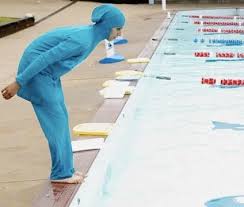 The female participants admitted their negativity about exercise because “their grooming efforts might be ruined” and they prefer not to wear any sports attire underneath their dresses and head scarves (p. 121). Similarly, Kristin Walseth (2006) researched the relationship between young Muslim women’s identity work and their involvement in sport, and concluded that these women tend to be “confronted with an ideal of femininity that is not compatible with sport participation” (p. 84).
Aside from feeling apprehensive about their appearance or dress in relation to religious and ethnic identity, research has shown that the lack of female sport participation within the Islamic community may also be contributed to a lack of approval or involvement of others. Participants in Berger and Peerson’s study (2009) felt they lacked female role models among their friends and families. In their study of young Muslim girls, their teachers, and their parents, Dagkas, Benn, and Jawad (2011) found that there “are very few (Muslim women) role models in coaching or teaching” and “young people don’t have any Asian role models they can look up to who are ‘sports personalities’” (p. 231). One teacher was even quoted as saying, “Many families and parents do not value sport as an important part of their child’s education, they do not encourage it…It is important to change the views of parents and to get them more involved in their children’s education” (Dagkas, et. al., 2009, p. 234). Furthermore, Arar & Rigbi (2009) looked at the Muslim Arab-Israeli community and investigated youth participation and perception regarding physical education. They concluded that female participation was related to a family that encouraged engaging in physical activity, as well as PE teachers who exhibit devotion and professionalism towards the subject (Arar & Rigbi, 2009). It is important that young girls in the Islamic community have the encouragement of their peers, their family and their teachers in order to view sport as an acceptable, healthy, and enjoyable social activity.
While there must be more of a concerted effort to be aware of particular social, cultural and emotional hurdles as discussed above, we must also acknowledge potential problems that exist within the logistics of the programs themselves. Female sport participation within Islamic communities may also be affected by these kinds of barriers. The Women’s Sport and Fitness Foundation (2010), along with Sporting Equals, explored some common reasons as to why Muslim women choose not to play. Some of these obstacles are related to logistical and area set-up issues, such as:
- The reluctance to use public transportation when no other transport options are available.
- A lack of childcare alternatives for women with children.
- The absence of safety measures such as appropriate lighting and security to “prevent racially motivated incidents.”
- Unclear communication due to language barriers, resulting in anxiety and confusion about how to access services.
It is critical that sport organizations and programs recognize the potential faults and gaps within their own program frameworks in order to better meet the needs of the Muslim female community. On the bright side, it is clear that some girls do in fact want to play. Lee Mitchell wrote a brief article in The National (2010) about what it is like to coach the sport of football to girls in a Muslim country. He emphasizes that even though the girls were novices with no previous training, they were very clearly enthusiastic about the game and ready to learn. Mitchell (2010) notes, “They really enjoy playing and that is a positive thing. For many of the girls who I worked with in the United States, it was more of a means to an end. It was a full college scholarship, which is what they were playing for more than, sometimes, the fun of the game.” As these obstacles to female sport participation in the Islamic community are acknowledged and overcome, one would hope that other related issues are resolved as well. Six Middle-Eastern countries are among the top 10 in the world with the highest prevalence of diabetes (Hamdan, 2011). Health and nutritional awareness is not very high, as a study performed in the UAE during 2009/2010 (Ng, et. al., 2011) showed that 65% of adult women, 40% of female adolescents, and 41% of female children were overweight or obese. While sport has the ability to be a fantastic avenue towards overall health, well-being, and cultural and social acceptance, participation is not always a foregone conclusion. Muslim women who wish to play face certain social and external barriers, all while negotiating complex gender, religious and ethnic identities. It appears that awareness of players’ identities and flexibility within sport program frameworks is a step in the right direction for increasing female participation in the Islamic community.
References:
Ahmad, A. (2011). British football: Where are the Muslim female footballers? Exploring the connections between gender, ethnicity and Islam. Soccer & Society, 12(3), 443-456.
Berger, G., & Peerson, A. (2009). Giving young Emirati women a voice: Participatory action research on physical activity. Health & Place, 15(1), 117-124. Retrieved January 10, 2015, from Science Direct.
Dagkas, S., Benn, T., Jawad, H. (2011). Multiple voices: improving participation of Muslim girls in physical education and school sport. Sport, Education and Society, 16(2), 223-239.
Arar, K., & Rigbi, A. (2009). ‘To participate or not to participate?’—status and perception of physical education among Muslim Arab-Israeli secondary school pupils. Sport, Education and Society, 183-202.
Jawad, H. (2009). Islamic Feminism: Leadership Roles and Public Representation. Journal of Women of the Middle East and the Islamic World, 7, 1-24.
Jawad, H., Al-Sinani, Y., & Benn, T. (2011). Islam, women and sport. In Muslim Women and Sport (pp. 25-40). New York, NY: Routledge, Taylor & Francis Group.
Mitchell, L. (2010, January 16). What is it like… to coach football to girls in a Muslim country. Retrieved January 16, 2015, from http://www.thenational.ae/sport/b-what-is-it-like-b-to-coach-football-to-girls-in-a-muslim-country
Muslim Women in Sport. (2010, January). Retrieved January 15, 2015, from http://www.wsff.org.uk/system/1/assets/files/000/000/251/251/ac6234e5e/original/Muslim_women_in_sport.pdf
Ng, S. W., Zaghloul, S., Ali, H., Harrison, G., Yeatts, K., El Sadig, M., & Popkin, B. M. (2011). Nutrition transition in the united arab emirates. European Journal of Clinical Nutrition, 65(12), 1328-37.
Walseth, K. (2006). Young Muslim Women and Sport: the Impact of Identity Work. Leisure Studies, 25(1), 75-94.
Wise, M. (2012, August 3). Afghan sprinter Tahmina Kohistani shows what’s possible for Muslim women. Retrieved January 16, 2015, from http://www.washingtonpost.com/sports/olympics/afghan-sprinter-tahima-kohistani-shows-whats-possible-for-muslim-women/2012/08/03/aa7414f6-dda6-11e1-9ff9-1dcd8858ad02_story.html
Honoring Secretary Colin Powell this African American History Month
Without vision and leadership, progress is not possible. Without progress, opportunities are limited. Without opportunities, the future will remain bleak for any people, nation or global community.
The month of February, the celebration of National African American History Month in the United States, and African history in Canada and the United Kingdom, is a time for our entire nation to reflect. We reflect on the struggles and triumphs of a race of people who relentlessly pursued progress. We reflect on the notion that an idea or a dream—combined with leadership, continuity and a vision—can become a reality.
We reflect on the power of opportunity.
At O Street International, we believe opportunities are the nexus to achieving understanding and appreciation amongst groups, regardless of gender, race, ethnic, religion or socioeconomic status— all of which are defining categories of culture. Through cultural and educational exchanges, we strive to increase relationship building across groups both internationally and domestically. We understand the importance of culture; therefore, we use it to form those lasting relationships needed to transcend barriers, open the doors to collaboration and create opportunities to mend relationships that were once broken. And we do this in the spirit of those extraordinary persons who have led the way.
Honoring Those Who Paved the Path
To celebrate National African American History Month, O Street International has created a tradition of commemorating the diplomatic accomplishments of African Americans. Each year, we will recognize one of the many black Americans who have significantly influenced the international cultural diplomacy community.
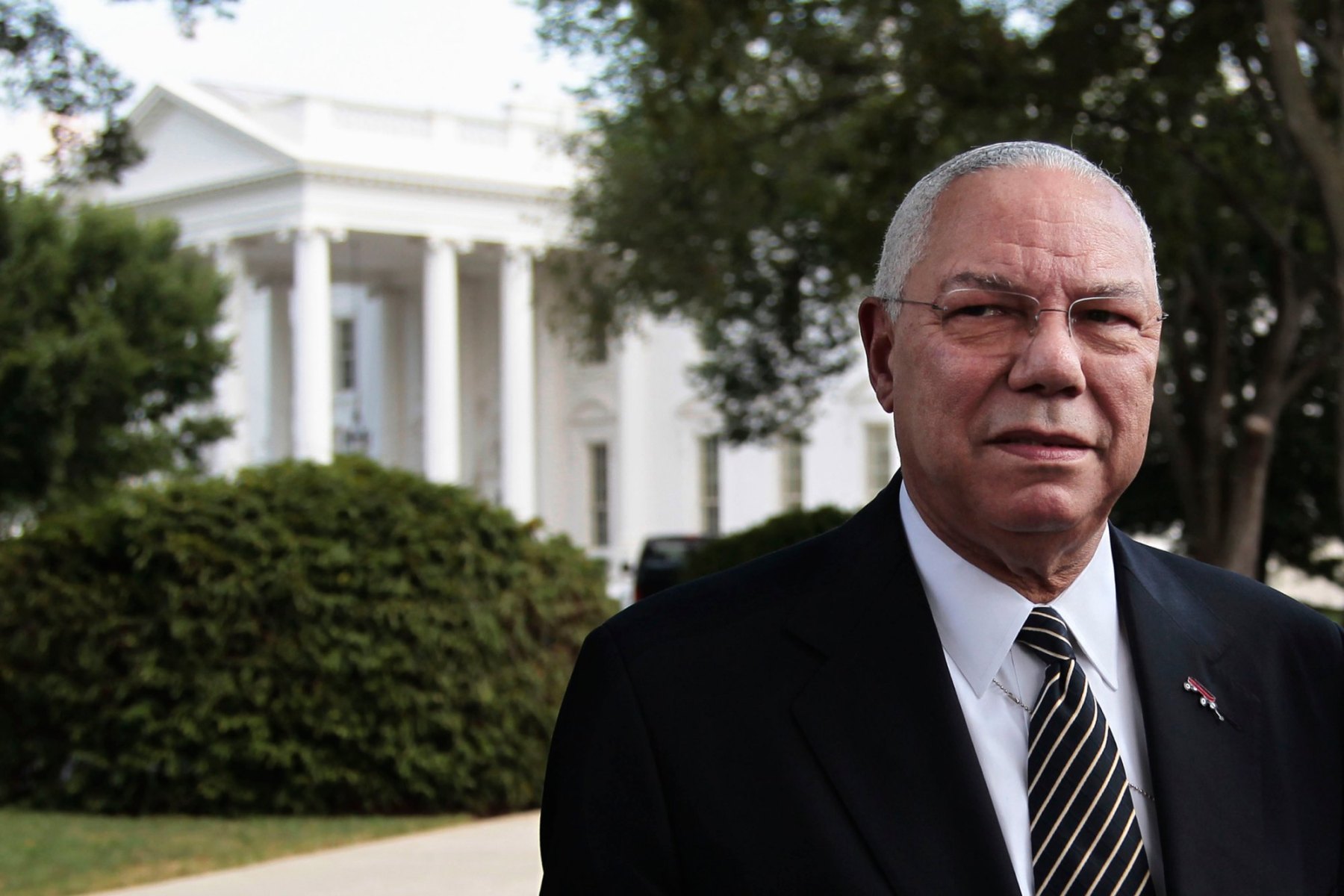
This year, we honor Former Secretary of State, General Colin Powell.
On January 20, 2001, President George W. Bush appointed Powell to serve as Secretary of State, making him the first African American to serve in this role. Secretary Powell is no stranger to firsts—he was the first black Army officer to command a four-star troop and the only African American to serve on the Joint Chiefs of Staff. These firsts are only a few that Secretary Powell has amassed throughout his decorated years of service.
I first met Secretary Powell in 2004 while serving as a Cultural Envoy for the U.S. Department of State. This experience gave me direct access to America’s diplomats, their honest insight and the true pulse of a life led by a global ambassador. It was not lost on me that everyone I encountered regarded Secretary Powell and Deputy Secretary Richard Armitage as remarkable leaders, and I was included in that number. His leadership and vision for the Department of State was different than many had ever experienced. The energy was one of diversity and inclusion. In his own words, “America is a nation of nations, made up of people from every land, of every race and practicing faith. Our diversity is not a source of weakness; it is a source of strength; it is a source of our success.”
While serving as Secretary of State during a time of war and diplomatic unrest, an acutely important moment for American cultural diplomacy programming, Secretary Powell made it a priority to spotlight the efforts of those Americans who lent their talents and crafts to build relationships with other nations. On December 13, 2004, he honored the Bureau of Educational and Cultural Affairs’ cultural ambassadors and envoys for reaching out to young people around the world. “When it comes to helping people better understand America, the greatest ambassadors we have are the creators of American culture,” Powell said at the ceremony. This event, and others like it, fueled cultural diplomacy and gained the support from Congress, the President and U.S. Ambassadors across the globe. “When it comes to helping people better understand America, the greatest ambassadors we have are the creators of American culture.” As I heard those words from Secretary Powell, I knew the impact that sentiment would have on the future of cultural diplomacy. He propelled the idea forward, inspiring us all to leverage our role in foreign service to shape the perception of our country. I took that to heart, and I know so many of my peers did as well.
Embed from Getty ImagesToday, many foreign governments increasingly invest in cultural or soft diplomacy. Thanks to Secretary Powell, and other like-minded leaders, we now understand how culture and diplomacy can promote new ideas. Using the universal languages of the arts, music, technology and sports— the entire gamut of cultural norms that we all share as a global community—we can connect with each other in deeper, more meaningful, ways. We can build with one another, forge a new way of living and understanding one another. We can create change.
Throughout his tenure as Secretary of State, Secretary Powell and his administration truly valued cultural diplomacy outreach and viewed it as an opportunity to foster understanding between the United States and other countries. He has served the United States and the global community with an unparalleled sense of integrity, diplomacy and fortitude, leaving an indelible mark on our nation’s history. And for that, we are incredibly grateful.
-By Omari Faulkner
 O Street International